Russian cuisine

Russian kasha

 Kasha means porridge. One Russian proverb says “Bread and Porridge is our food”. A pot with a porridge and bread were the main food on a table many years back. A large varieties of cereals are produced in Russia, but the popular and loved one has been the buckweat.
 According to old Russian tradition, during the wedding a bridegroom and a bride had to cook a porridge together. If they could cooked a good, tasty porridge that meant they could get on with each other. A porridge was cooked for many occasions like a wedding or Christmas feast, birth or funeral repast. Sometimes a feast was called ‘kasha’. Every hostess had a personal recipe of porridge, which she kept in a secret. 
 
 In Russian cuisine a porridge is divided into 3 groups by it’s consistency: liquid (eaten as a soup), oozy (usually for children) and crumbly (the tastiest one). The consistency depends on a quantity of water or milk, in which porridge was cooked. Pumpkin_millet

Millet porridge with butter or lard added was the common meal for Russian labors, who had worked in fields. It’s can be eaten sweet (with sugar, honey, dried fruits) or savoury (with onion, garlic, mushrooms), as a main dish or garnish.
 Moreover, millet is rich in calcium, B vitamins, iron, potassium, and contain no gluten.

  
We need:

  • pumpkin
  • millet – 1 cup
  • water – 1/2 cup
  • milk – 1 cup
  • a knob of butter
  • few dried apricots
  • raisins
  • sugar – 1Tbsp
  • a pinch of salt
Take a pumpkin. 
Cut the lid and set aside. Clean all seeds out.
Put a knob of butter on the pumpkin bottom.
Wash millet thoroughly under running tab water. Mix with raisins and sliced dried apricots. 
Put the cereal mixture in the pumpkin. Add a pinch of salt and some sugar to taste. Pour the milk and water, cover with the lid.
Bake for 1-2 hours.
Open the lid. 
Tasty millet porridge in pumpkin pot is ready!
Serve with honey.
Pumpkin_millet-2 
P.S. For 1 cup millet take 1 cup milk+1/2 cup water. Sub millet with rice.
 
P.P.S. Don’t throw away seeds. Sprinkle over some sea salt and smoked paprika. Add olive oil and bake on a baking paper along with the pumpkin.

Stuffed capsicums. Russian recipe.

First of all, guys, have you seen Jamie Oliver’s live foodtube show yesterday? I’m a huge fan of him, he is so inspiring person! It started 12:30am Dubai time and today has been working day. I’ve honestly tried to watch it, but after half an hour I fell asleep:) Going to watch it today.

There are a large variety of fillings that are used for stuffed capsicums worldwide.

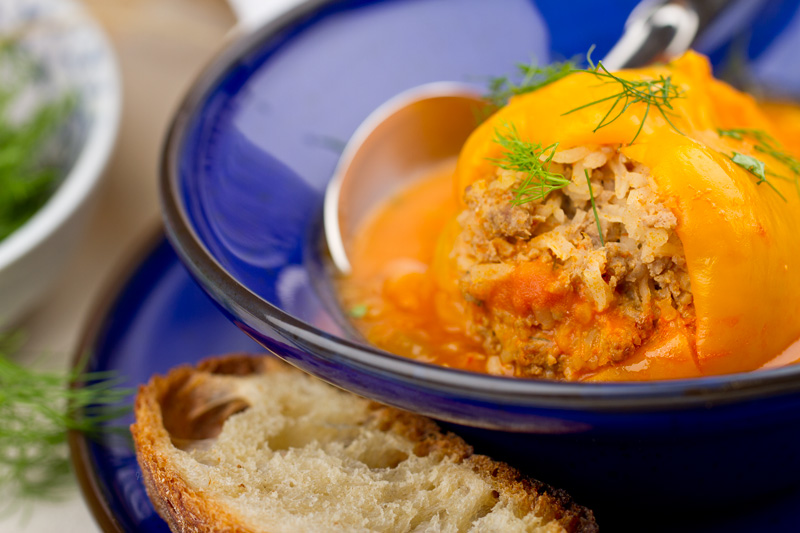
The most widely known in Russia is ground pork with rice. However, the concept has mutated to suit up-to-date needs, and peppers are filled with couscous, wild rice, cheese and etc.

Peppers_3

You need around 60-70g of the filling per capsicum.
 
8-10 medium-sized capsicums
500g ground pork/beef or 250g pork+250g beef (I used beef)
100-150g rice, short-grain preferably 
2 carrots, shredded
1 big onion, finely chopped
200g sour cream
100g tomato paste
200-400ml lukewarm water, I prefer veg stock
sunflower or olive oil for frying
salt, black pepper
small bunch of dill or parsley, chopped (optionally)


Wash the rice thoroughly, cook in 100ml of water until semi-done (around 7-8 minutes).

In a small pan over medium heat, fry carrots and onions until tender and they’ve get golden color.

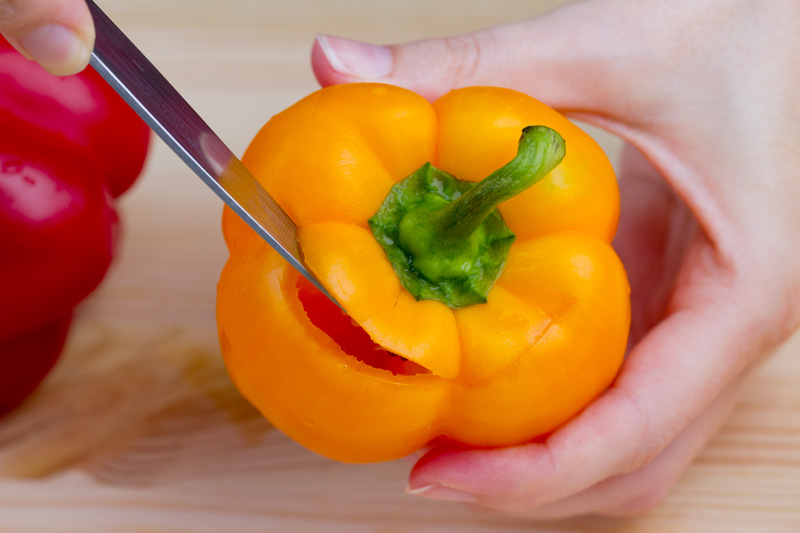
Meanwhile, wash capsicums, cut the tops off each pepper and remove seeds. If peppers do not stand up straight, slice a little (!) off the bottom of the pepper to level it out.

Peppers_1Peppers_2Mix meat, cooked rice and 1/2 of veggies together (if you don’t like onion and carrot in filling, escape this step). Add salt, black pepper to taste. Fill the capsicums tightly and place in a baking dish.

In a bowl combine sour cream, tomato paste and the remaining 1/2 veggies together.

Pour the sauce in a large deep dish. Place the stuffed capsicums in.

Pour the stock or water slightly below the brim of the capsicums.

Close the dish with a lid, bring to boil, reduce heat and simmer on a lower-medium heat for 35-45 minutes.

Serve with the sauce, in which peppers were cooked, or sour cream.

Sprinkle over some fresh dill or parsley.

Peppers_4

Yummy! 🙂

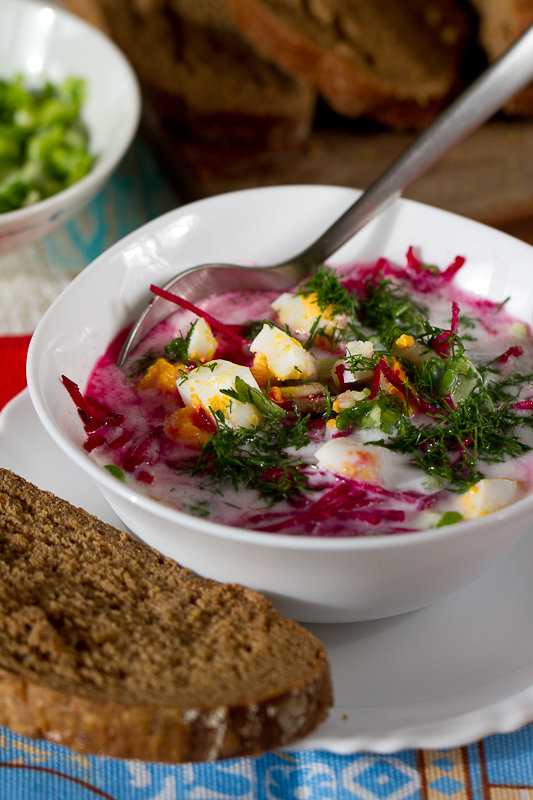
Russian cold soup-Sveckolnik

    Sveckolnik [sve’koljnik] – Russian summer cold soup, which goes really well during the summer heat. The name comes from the word “sveckla”, which denotes beetroot.
   When AC and even hundreds of ice cream don’t help you against hot, this light soup refreshes and cools you. 
  The main ingredient is a raw beetroot, it’s high in vitamins, minerals and fiber that can effect the digestive system in a positive ways.
Raw beets are one of the top vegetables for nutritious raw eating, according to Bastyr University.
   You can include this light soup in your balanced diet and it takes only few minutes to prepare it.
Svekolnik-5
Ingredients:
beetroot – 2 small
cucumbers – 3-4
eggs – 1-2 per plate
a bunch of spring onion
a small bunch of dill
1 garlic clove
buttermilk 400 ml
water 200 ml
salt, sugar to taste
sour cream (optional)

Better to choose small young beets. And you can substitute raw beets with boiled, if you like.

Shred beets and cucumbers, put them in a deep plate.
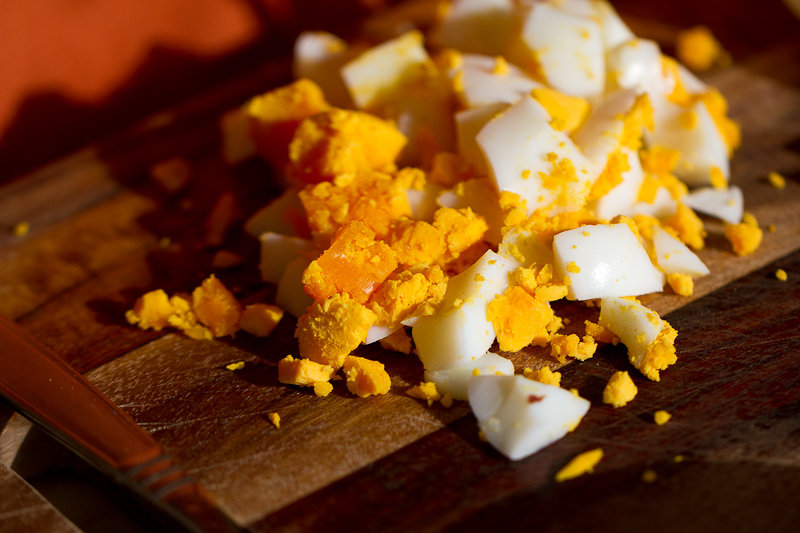
Boil eggs for 10 minutes, let cool and cut them into chunks.
Svekolnik-3
Slice green onions, put it in a cup and add some salt. With teaspoon begin to grind the salt into onions.
Svekolnik
Add crushed garlic and mix.
Svekolnik-2
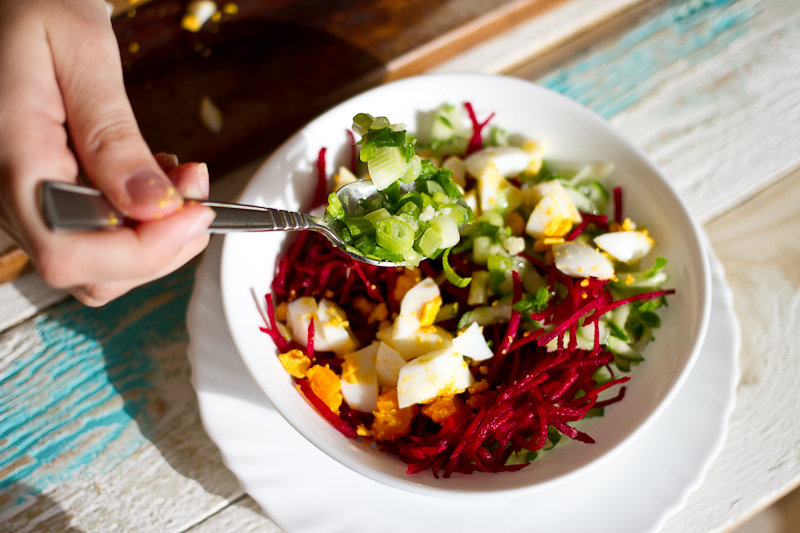
Combine together beets, cucumbers, eggs, onions and dill. Add a pinch of sugar.
Svekolnik-4
For the liquid part buttermilk is mixed with cold drinking water, the volume and thickness of it totally depends on your taste.
 If you can find “salted lassi”  (yougurt drink)-use it, no need to dilute with water; in Arabian countries it’s called “laban up”, in Russia – “tan”, “sivorotka” .

Pour the buttermilk over dry ingredients and mix well. Sprinkle some dill.

Svekolnik-6
  Enjoy! 🙂
You can serve it with a dollop of sour cream and rye bread.

Forgiveness Sunday

 Today is the last day of Butterweek, which is called Forgiveness Sunday, when people ask each other for forgiveness.

caviar_blini3

Farewell to Butterweek is a traditional folk gathering, along with theatrical performances, sleighs’ sliding, games and amusements.

 A culmination of the festival is burning of an Idol made from straw and dressed as a woman, which is called Winter scarecrow and symbolized farewell to the winter and greeting the spring. 

масленица2  A straw-woman was burned in a field, beyond villages. Old stuff, clothes were burned also in fires, besides straw and firewoods. Nowadays it takes place in city/town squares, where all citizens are able to come.

масленца

Have a lovely weekend, guys! 😀


*painted pics I took from the net


Butterweek and Russian Pancakes!

    What can be special in pancakes, you think? In this case, you have never tried real Russian pancakes with their special aroma and taste! 🙂

     Russian author Alexander Kuprin gave good characterization to pancakes:

“A pancake is round-shaped as the generous sun. A pancake is red and warm as the hot sun. A pancake greased with butter is a recollection of sacrifices, which were made for a mighty stone idols. A pancake is a symbol of the sun, nice days, good harvests, happy marriages and healthy children.”

Some ages ago, a man was accompanied by a pancake all their life. From birth, when pregnant woman was eaten pancakes, and until death, when pancakes were served during funeral repast (we still follow this tradition).

Nowadays, pancakes are essential treats for Butterweek (Rus.-Maslenica). It’s the spring festival, the week before Lent (The Great Fast) for Christians in Russia. During this week women bake pancakes every day(!), invite relatives and friends, and celebrate the spring.

Crepes-2

Lots of Russian authors mentioned pancakes in their work. A good example, “Eugene Onegin” by Alexander Pushkin:

  “Throughout their life, so calm, so peaceful,

  Sweet old tradition was preserved:

  For them, in Butterweek the greaseful,

  Russian pancakes were always served..”

Every day of Butterweek has a name and meaning.

Monday is “meeting”. The daughter-in-law visited her parents, then father and mother-in-law visited their house and their decided together how to celebrate. First-cooked pancakes were given to poor people in commemoration of deceased. In the evening, children went to slide from snow hills.

Today is “flirting”  🙂 Usually it was day for weddings. Just married couples and their guests went to slide from snow hills. In every house baked “hills” of pancakes. 🙂

Crepes-1

  Have a nice week! 😀