Tag Archives: Russian

Braised Rabbit with red wine, prunes and thyme

 I’m sure you know that Easter is on the way (Catholic falls on April 5 and Orthodox April 12), and you’re probably planning what to cook, or searching your notes with traditional recipes. I think some of you have a special main course recipe for this occasion, or may be it’s a wide range of recipes. What will you choose this year? An elegant dish or simple&casual? I think, with spring bringing nice and pretty weather, that you’re likely to be in the mood for something hearty and light! 🙂Braised Rabbit I’ve always been partial to rabbit; when I’m visiting my parents in Russia I’m always pleased to eat a rabbit stewed in sour cream. It’s always tender and delicious, of course because it’s prepared by my mom. 😀 Today recipe is elegant and great for a special dinner! I’d like you to try rabbit with prunes and thyme, braised in red wine. It requires few ingredients to be transformed into a flavoursome meal! Enjoy!Braised Rabbit with prunes, juniper berries and thyme
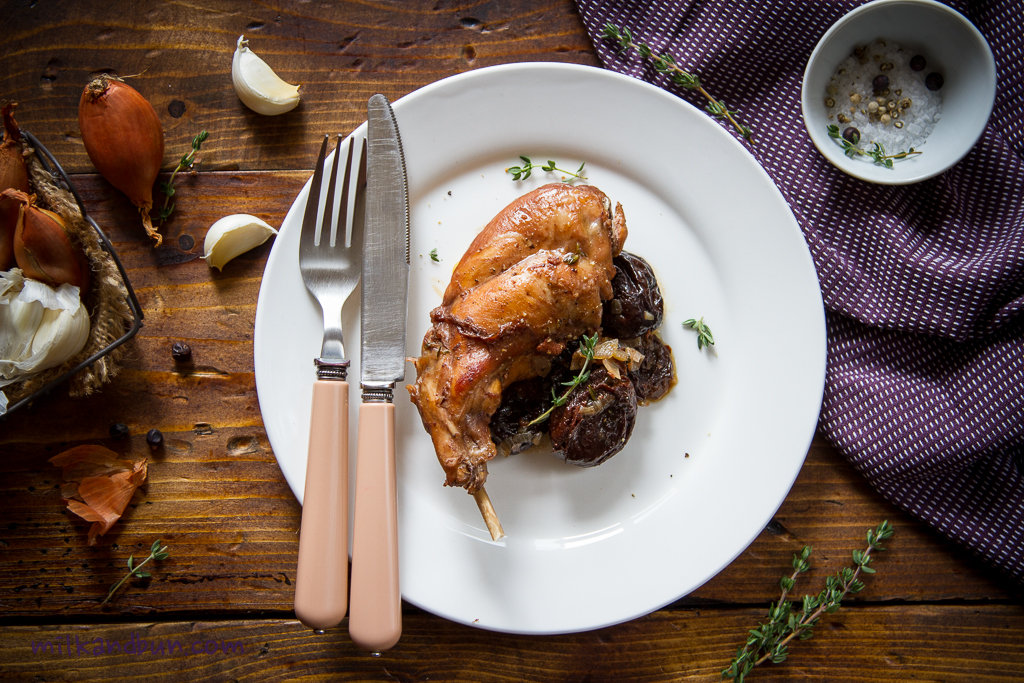
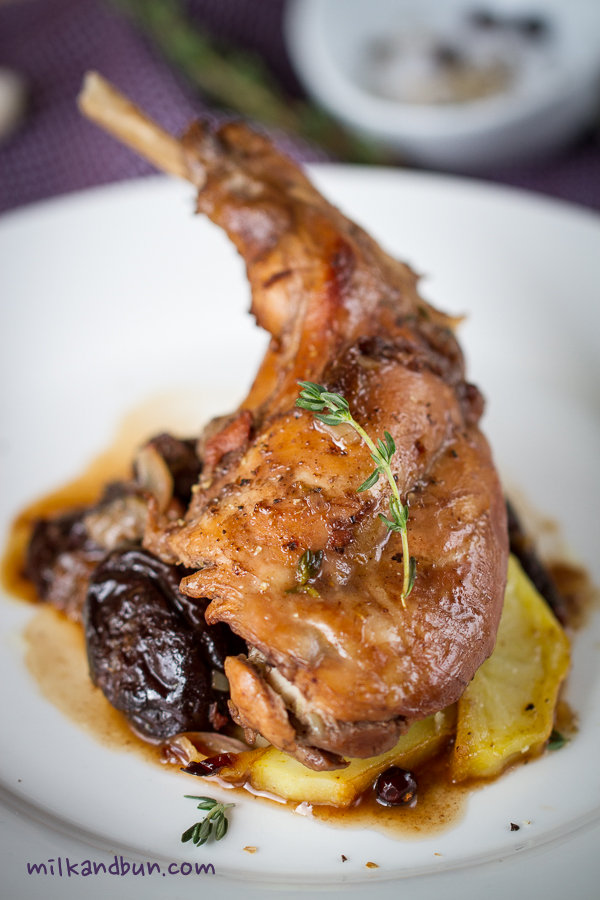
Braised Rabbit with red wine, prunes and thyme

  • Servings: 3-4
  • Difficulty: moderate
  • Print
Ingredients
1 rabbit, 1.3-1.5kg
water
1-2 tsp apple or wine vinegar, optional
2 tbsp olive oil
20g butter
1-2 garlic clove, peeled, chopped
5-6 shallots or 1 onion, chopped
1 bay leaf
4 black peppercorns, optional
4-5 juniper berries
12-15 prunes, pitted
4 springs thyme or 1 tsp dried
150ml dry red wine
100ml or more hot water, if needed
sea salt and white pepper to taste
Garnish
boiled or roasted potatoes
sour cream
Preparation method
  1. Joint the rabbit, wash it and put in a large bowl, fully cover the meat with water, add vinegar if using, then cover with a wrap and leave to marinate for 1-3 hours. It helps to make rabbit meat more tender and get rid of any unpleasant smell.
  2. Heat the oil and butter in a heavy-bottom pan on a medium-high heat.  Add the rabbit pieces and brown each side for 6-8 minutes or until golden colour. Take out the rabbit pieces and place aside. Don’t clean the pan.
  3. Reduce the heat to medium, add onions, garlic, peppercorns (if using), juniper berries, bay leaf, some thyme leaves and sauté for 3-5 minutes or until onion have softened. Add rabbit, pour over wine and scrape up the bottom of the pan. Bring to boil, reduce the heat to medium and simmer for 15 minutes.
  4. Fold in prunes and remaining thyme. Season to taste. The liquid should come half way up the rabbit pieces. So, add some water, if needed. Reduce heat to low, cover with a lid (keep a small slit) and braise the rabbit for 45 minutes. Now turn the rabbit pieces on the other side, adjust the seasoning, again cover the pan with a lid and braise for further 40-45 minutes. The rabbit should be easily pulling off the bone.
  5. Serve with sliced boiled/roasted potatoes, or rice. Add a tablespoon of sour creme, if desired.
Mimosa Salad

 Hello guys! It’s a very special Friday for me. I’m so glad and excited that I’m co-hosting the wonderful virtual party – Fiesta Friday by Angie, and Jhuls is another great co-host this time. I’d like to invite everyone and each of you to join the very-friendly party! Let us know that you’re joined by linking your post to Angie, me and Jhuls. Of course, will be lots of appetizers and welcome drinks, and you can eat&drink non-stop! 😀 Newbies could find the guidelines here. Another point is to bring your favourite dishes and put the link here, so every blogger can grab a slice of your cake or tuck in the stew while chatting. You’re also welcome to visit and like other bloggers’ posts and of course you can leave a comment or just say hi; it’s such a lovely possibility to find new blogofriends, have a small talk and plenty of fun!Mimosa Salad
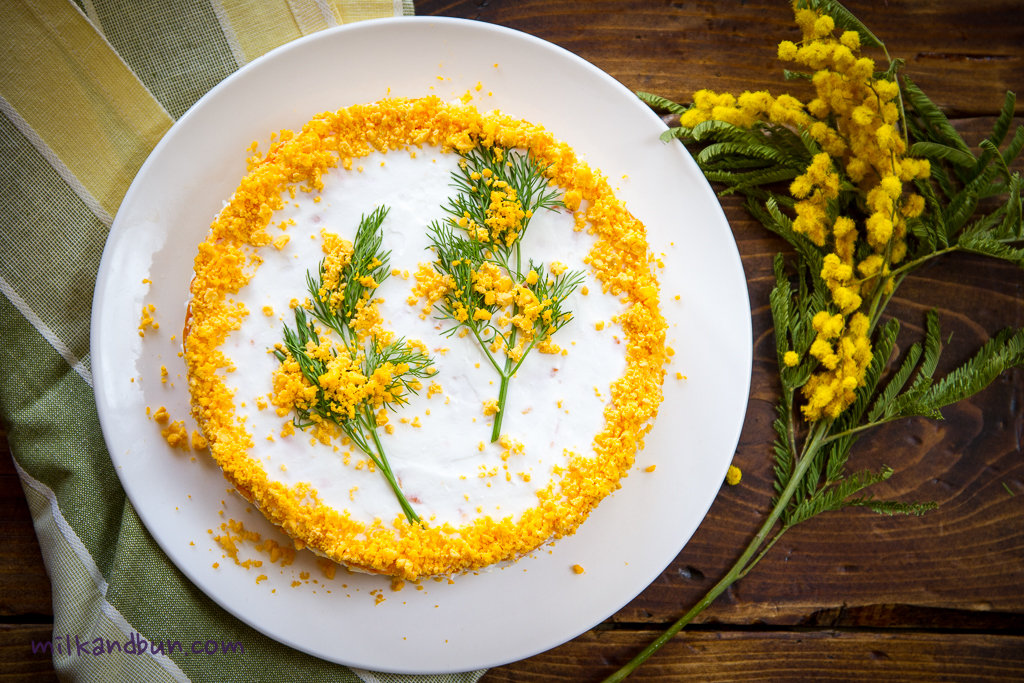
 I have decided to bring this nice-looking salad to the party, it’s Russian layered salad or to be exact Soviet salad, but still popular in many ex-USSR countries. In Russia we have lots of layered salad recipes, so many that I even don’t how many. 😀 This one is associated with spring (thou, also popular for New Year), Women’s Day and it’s named after the beautiful flower – mimosa. Last layer of the salad is crumbled egg yolks, which remind little yellow blossoms of mimosa. The main ingredient is canned fish here, so the salad is very budget and at the same time tasty, plus looks festive (that was important during deficit time). Usually saury/saira fish is used in ‘mimosa’, but salmon species is also good here, like red or pink salmon. I’ve tried to make it with tuna and can’t recommend it, its meat too dry for this salad, but if it’s the only canned fish you can get – add more sour cream or mayonnaise. Many variations exist – with or without potatoes, with cheese, spring onions, grated butter, etc. Better to prepare this salad some time in advance before serving to allow all layers to soak; so you can make it a night ahead.
Russian Salad-Mimosa

Mimosa Salad

  • Servings: 4-6
  • Difficulty: easy
  • Print
To make salad more rich you can add some grated butter – between carrot and yolks layer. 
Ingredients
1 large or 2 medium potatoes
1 large carrot
3 large eggs or 4 medium
250g canned fish (I used red salmon)
1 small onion, finely chopped
150-200g mix of sour cream and mayo (or only mayo)
some fresh dill, optional
salt to taste
Method
  • Wash potatoes and carrot, don’t peel. In a large pot with water, add potatoes, carrot and boil it until ready. Cool, peel the skin, then grate on a small or medium grater into separate bowls. Set aside.
  • Hard boil the eggs, cool and separate whites and yolks. Finely chop or grate.
  • Put chopped onion into a small bowl, cover with hot water and keep for 10 minutes. Drain the water.
  • Drain the fish and mash it with a fork.
  • Prepare a deep serving bowl or another serving plate. Arrange grated potatoes evenly on the bottom. Spread some mayo.
  • Make fish layer, then add chopped onion and spread more mayo.
  • Arrange egg whites and spread again mayo.
  • Arrange grated carrot and spread again mayo.
  • Arrange egg yolks. It was the last layer.
  • You can sprinkle the salad with chopped dill, if desired, or decorate whatever you want. Enjoy!
You can cover the salad with a piece of foil and keep in the fridge for 2-3 days.

Mimosa-Russian layered salad

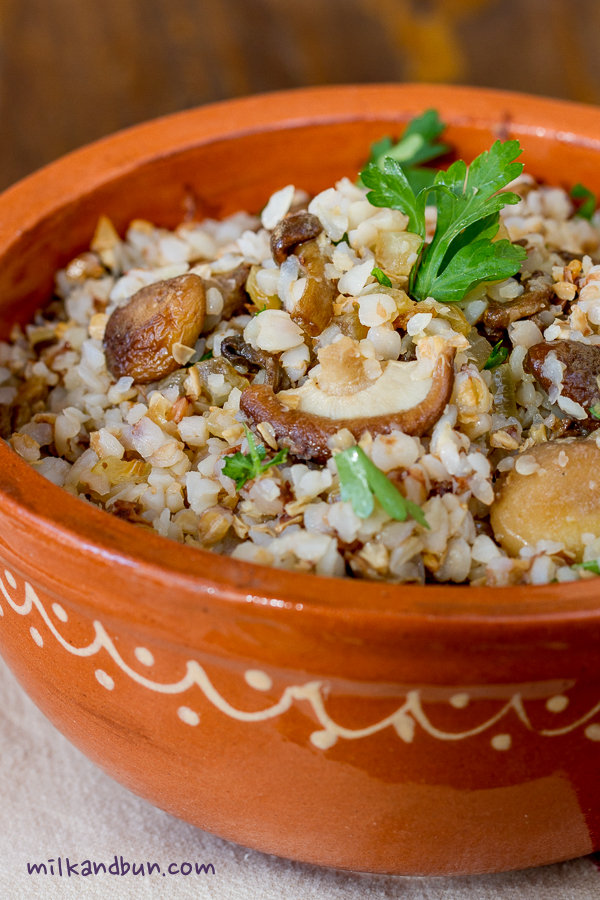
Russian buckwheat kasha with mushrooms

 Buckwheat has always been a popular grain in Russia. It was brought in 7th century from Greece and soon became  extremely popular. Buckwheat was new and unknown grain in Russia, so it was called “Greek grain” or shortly “grechka”. It’s not a surprise why buckwheat was very beloved in old Russia: peasants called it “mother”, they grown it in a large amounts, so it was cheap and affordable grain. Moreover, it’s cooked quickly and has a high nutritional value – a plate of buckwheat kasha (porridge) for breakfast can keep you full for a long time. Buckwheat porridge was a favorite meal not only among peasants, it was also cooked for upper classes but with plenty of butter or sour cream. 
 Nowadays, there are lots of recipes with buckwheat, it’s cooked with milk and eaten for breakfast or as a side dish for meat like beefstroganov. Buckwheat porridge with fried onion and mushrooms is a popular dish in Russia, especially during the Great Lent when grains, vegetables and mushrooms become the main foods.
Russian Buckwheat Kasha
  Hope all lovely bloggers partying at Fiesta Friday will like this Russian buckwheat porridge, it contains vitamins, healthy organic acids and oils! Enjoy! 🙂

Russian buckwheat kasha with mushrooms

  • Servings: 2
  • Difficulty: easy
  • Print
During the Great Lent or for vegetarian option omit the butter or substitute it with any veg.oil 
IngredientsBuckwheat Kasha (porridge)
200ml buckwheat
400ml water
1 tsp butter
1 Tbsp sunflower or other veg.oil
1 large onion, chopped
200g mixed mushrooms (or 400g frozen), chopped
25-30g butter
salt, pepper to taste
fresh chopped parsley, optional
  1. Wash buckwheat, put it a thick-bottomed or iron-castle pan, fry on a low heat without any oil for 2-3 minutes. Add water and good pinch of salt. Bring it to boil on a medium heat, then reduce the heat to low, add a teaspoon butter and simmer for 17-20 minutes or until all water will be absorbed. Don’t stir buckwheat during the cooking. When it’s ready, take the pan off the heat, cover with lid and few kitchen towels, let it rest for 5-10 minutes.
  2. Meanwhile, heat the oil in a frying pan, add onion and fry for few minutes. Stir in mushrooms, season to taste and fry on a medium-high heat until mushrooms are ready.
  3. Stir the mushroom mixture and butter into buckwheat. Sprinkle with parsley, if desired. Serve warm as a main dish or side dish to chicken, stewed meat or sausages. Enjoy!

Buckwheat Kasha with mushrooms

Crepe Cake with custard creme

 Yes-yes! It’s blini again! I was eating lots of crepes last two weeks, seems I need to stop. 😀 But this is the whole cake! Believe me, you need to try it once to be obsessed forever! 😉 Just few days back I was watching one video and Russian confectioner made sweet blini-cake, it was a sign to make it and of course to try new recipe of blini. It turned out to be easy to make, but get ready to prepare a lots of blini! Despite the fact that I used too wide pan and the stack wasn’t high as much as I wanted, blini turned out thin, tender and very tasty.Blini Cake with custard cream

 I decided to make custard cream (the confectioner made another cream), which is not very sweet and buttery. The quantity of the cream was more than enough for my cake, so I spread it on each crepe and put the cake in the fridge to set. Impatiently, I sliced into the cake, bite it and was surprised, the crepes absorbed almost all the cream. There was only the one way out – to eat it with sweet condensed milk on side. 😀 So, next time I will make double quantity of the cream.Crepe Cake

Crepe Cake with custard creme

  • Servings: 6-8
  • Difficulty: easy
  • Print
Before assembling the cake, allow the crepes and cream to cool completely.
The crepe-cake tastes also good on the second day and can be a tasty breakfast, if you manage to save a slice that long!
Thin Blini (crepes)
300g flour- sift in a bowl
1 tsp/5g salt
500ml milk
5 eggs, beaten
120ml water
70g butter, melted
Custard cream 
500ml milk, full fat
4 egg yolks
100g fine sugar
40g cornmeal
1 vanilla bean or 1 tsp extract
In a small bowl whisk together sugar and yolks until the mixture is pale. Add cornmeal while continuing to gently whisk the mixture.
In a pan bring milk with vanilla bean to a boil while constantly stirring and taking care not to burn it.
Gradually pour half of the hot milk into the egg mixture  while continuing to stir. Pour egg mixture into the pan with the other half of milk, continuously stir. Continue cooking and stirring to the point of the mixture becoming thick and custard forming – about 10 minutes.
Cool the custard completely.
Enjoy!

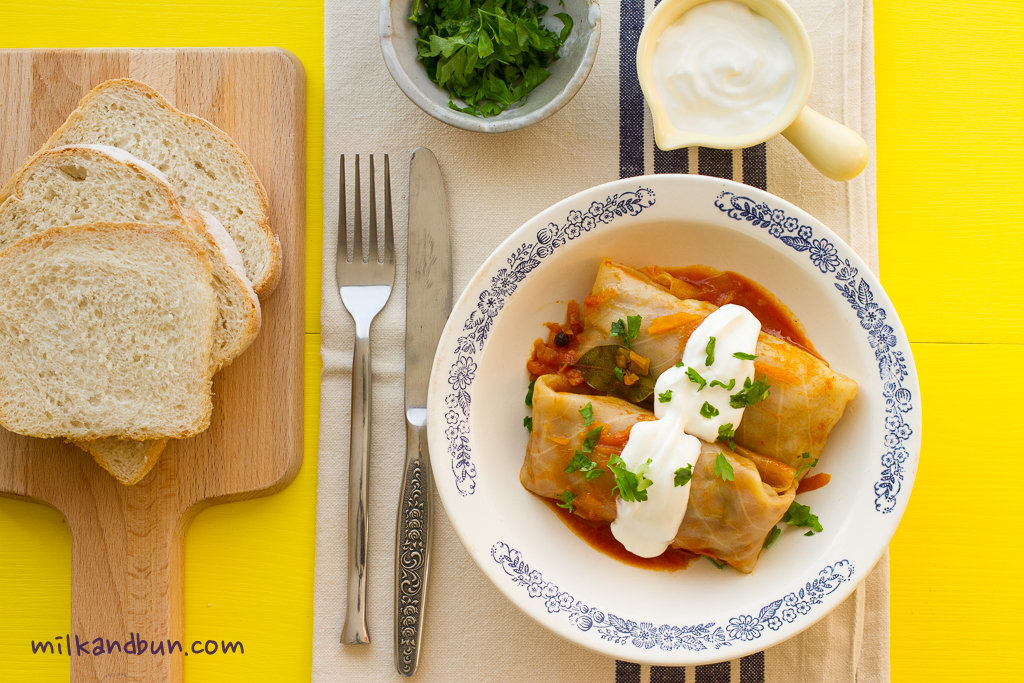
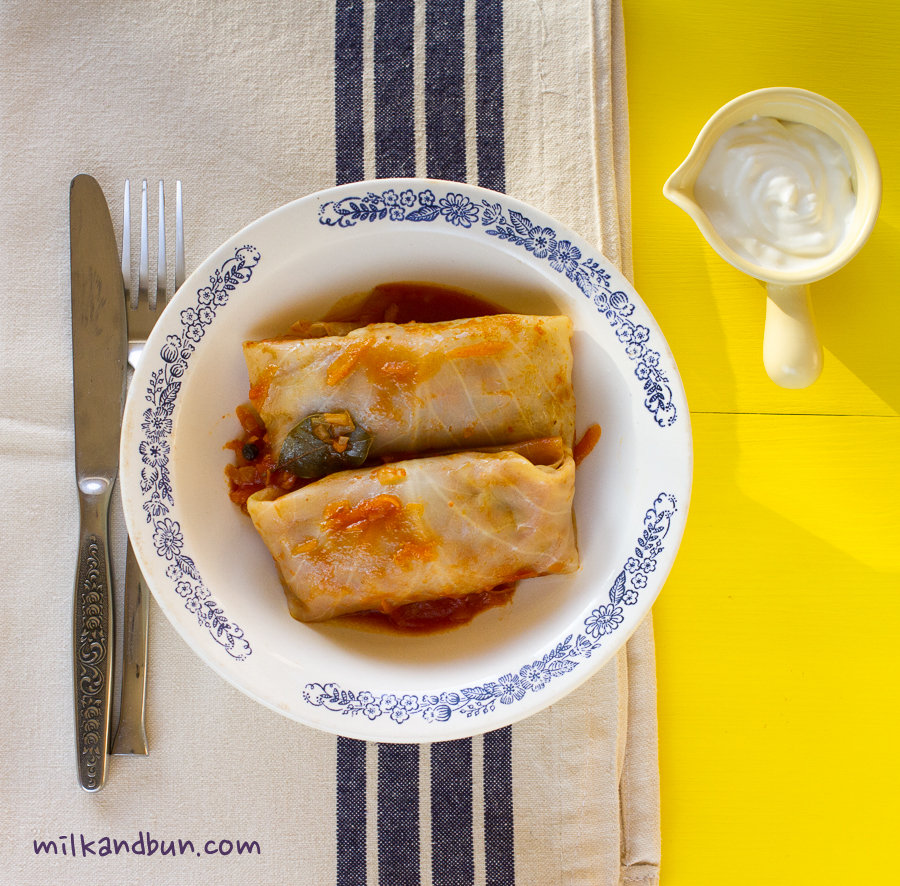
Golubtsi – Russian stuffed cabbage rolls

Stuffed cabbage rolls is a very popular dish in many countries over the world. In Russia, it’s called ‘golubtsi’ – white cabbage leaves stuffed with sautéed ground pork or beef and rice or buckwheat.
 Originally, cabbage leaves were stuffed with meat mixed with millet porridge and the dish was named ‘galushi’. But in 18-19th centuries France had a great influence on Russian cuisine, at least for the upper classes. Many French chefs streamed to Russian to work for royal courts, nobility and other wealthy families. Russian Golubtsi
 French cooking was so prevalent among the upper classes that there were not enough French-born chefs to fill the demand. Wealthy Russians began to send their serfs to work under French chefs in Moscow and Sr.Petersburg, and a few were even sent to France for their training. Some of these peasants were allowed to work in the city, provided they remitted to their masters the required obrok or quit-rent, which was a payment in kind or in money. Others were sold after they had completed their training. Count Rostov in Tolstoy’s War and Peace, for instance, spoke with satisfaction of paying a thousand rubles for Taras, a serf who prepared savory hazel grouse sautéed in Madeira for his daughter Natasha’s name day dinner.
 Thus, Russians were hooked on French dishes, and among which was popular a whole grilled pigeon, covered with a cabbage leave. The dish became fancy and well-liked, and soon was called simply ‘golubi’ or ‘golubtsi’ – from Russian word ‘golub’ that literally means pigeon. Lately cooks began to prepare a fake ‘pigeon’ – well-known stuffed cabbage rolls, which were cheaper and affordable for the lower classes.
Golubtsi - Russian stuffed cabbage rolls
Also, big thanks to Angie for featuring my post – red pancakes! I’m bringing these cabbage rolls to the super Fiesta Friday party! I know, it’s such a simple dish, that many of you have tried it already, but I hope you are tired of sweets and enjoy Russian comforting food. 🙂

Golubtsi - Russian stuffed cabbage rolls

  • Servings: 10-12 rolls
  • Difficulty: moderate
  • Print
Ingredients
1 white cabbage
500g beef mince (or mix pork+beef)
90-100g uncooked white rice, short-grain
1/2 large onion, finely chopped
1/2 carrot, shredded
1/2 tsp dried marjoram, optional
S&P to taste
Sauce
1/2 large onion, chopped
1/2 carrot,  shredded
2-3 tbsp tomato paste
oil, for frying
200-300ml water*
2 bay leaves
5-6 black peppercorns
S&P to taste
Garnish
sour cream, chopped parsley, optional
  • Sauce. In a large pan over medium heat, heat the oil. Add onion and carrot for the sauce, cook for 5-6 minutes or until soft. Stir in tomato paste. Turn off the heat and set aside.
  • Cabbage. Discard the 2 or 3 outer leaves of the cabbage. Carefully pull off leaves one by one. Bring a large pot of salted water to boil. Immerse cabbage leaves and cook for 3-4 minutes. Using tongs, take the leaves out and transfer to a bowl. *Reserve the water to use it lately for the sauce.
  • Filling. Cook the rice fro 8-10 minutes in bowling water. In a large bowl, mix together the beef, rice, onion, carrot and spices. You can fry onion before adding it to the filling.
  • Working with one cabbage leaf at a time, slice off the thick outer rib near the stem end. Place the leaf, rounded up like a bowl, stem end closest to you. Spoon about 2 tbsp of the meat mixture, form it into a short log shape.  Don’t make the rolls too tight. Transfer the roll, seams down, to the pan with sauce. Shape the remaining rolls in the same way.
  • Pour in water – just to cover the cabbage rolls, add more if needed. Season to taste, add bay leaves and peppercorns. On a medium-high heat bring it to boil. Then reduce heat to lower, cover the pan with a lid (or you can use a piece of foil) and cook for 40 minutes. You may cut one roll to test it.
  • Serve rolls with their cooking sauce, sprinkled with parsley and garnish with sour cream, if desired.

Golubtsi

1 5 6 7 17