Tag Archives: Russian

Salad “Tashkent”

 Tashkent is the capital of Uzbekistan, one of the former USSR countries. According to one version this salad was created in Moscow during USSR times, when Soviet government set the task to popularize the various national cuisines of the Soviet Union. Due to a very limited availability of the ingredients in most parts of the USSR, Soviet cuisine can be characterized as simple. So, the salad also had to be simple, tasty and nourishing. Another version says that the salad was created by chef of the “Tashkent” restaurant in Moscow, where it also was served for the first time.
 Main ingredients are boiled beef and green radish, sounds simple but believe me the salad will be very tasty! Unhealthy side is dressing, because it’s mayonnaise. So, I suggest to make and eat this salad during weekend, or serve it for a special occasion and everyone will certainly be in awe. 😉 You can also substitute mayo with sour cream, but the taste will be slightly different. Another option for dressing is flavorful sunflower oil, that sometimes mixed with a teaspoon of vinegar. Chose the option and enjoy the salad! 
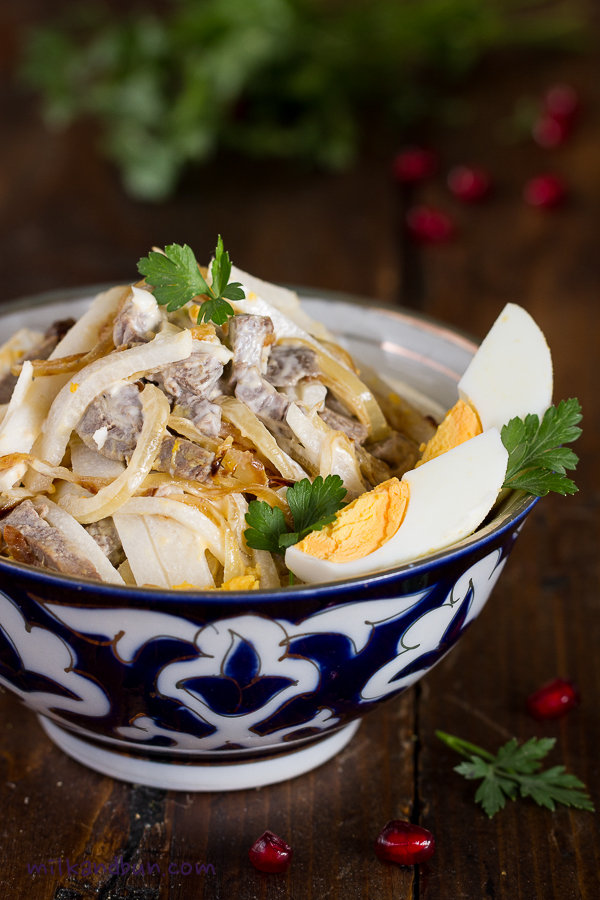
Tashkent Salad
  • Servings: 4
  • Difficulty: easy
  • Print
Ingredients 
400-500g beef fillet
800-900g green radish (I used daikon/Chinese white radish)
4 eggs, hard-boiled
1 large brown onion
2 tbsp sunflower oil for frying
100-150g mayonnaise for dressing (or sour cream/sunflower oil)
fresh chopped coriander or parsely for serving, optional
pomegranate seeds for serving, optional
salt, black pepper to taste
 
Preparation
  1. In a large pan, put the raw meat, cover with cold water, season with salt. Bring to boil, remove the foam, reduce the heat to medium, and simmer for 50-60 minutes. Optionally, you can add few peppercorns, bay leaf, small onion to get aromatic stock which you can use later. Cool the meat, then cut into julienne (thin strips).
  2. Cut eggs into thin strips. Optionally, instead of cutting eggs into strips you can cut them into 4 wedges and garnish the salad.
  3. Cut radish into julienne. Sprinkle radish with salt and let stand for 15 minutes, drain the liquid. If you are using green radish, cover it with cold water and leave for 1 hour to get rid of bitterness; then drain the water.
  4. Thinly slice the onion into half-moon. Heat the oil and fry the onion until golden-brown.
  5. In a large serving bowl, mix radish with onion, add beef, season with salt and pepper. Carefully stir in eggs and dress with mayonnaise. Garnish with coriander/parsley and pomegranate seeds.

Sharing at lovely Fiesta Friday party by Angie, and co-hosts this time Jhuls and Laurie.
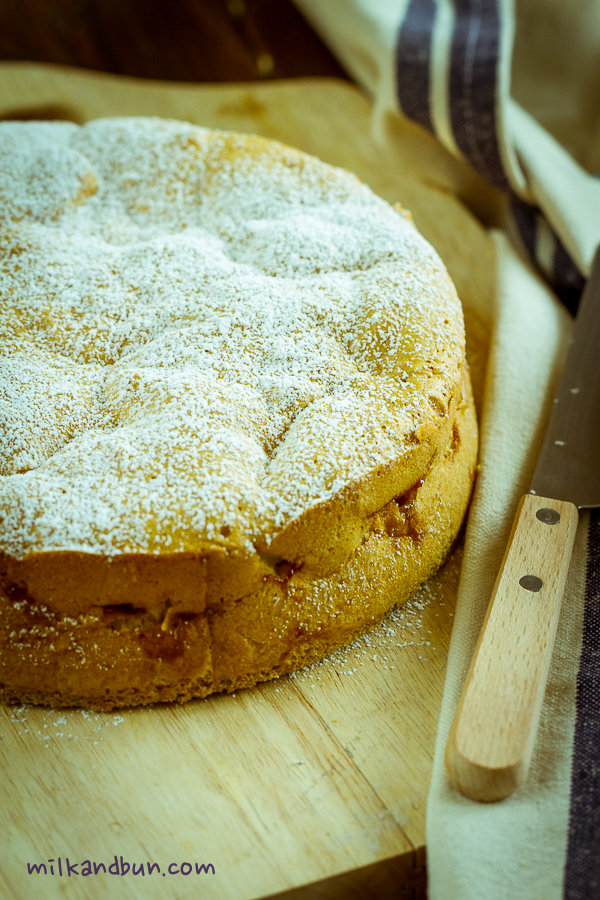
Sharlotka

 Sharlotka – that’s how one of the popular apple cake in Russia called. I believe this cake is so widely-known that there is no a man in Russian who wouldn’t heard about it. When I was a little girl I ate sharlotka so many times that I hardly can count, I ate it at my home, at friends’ home.. And I still love it! It’s one of the easiest recipe that always turns out great!
There are many varieties of Charlotte dessert. Russian ‘charlotte’ was created by French chef Marie-Antoine Careme who worked for Russian Tsar Alexander I in 19th century in London. Believed that the dessert took its name from Queen Charlotte, wife of George III of the Intied Kingdom, who loved apples. For this dessert the bottom of baking mold was lined with sponge cake or savoiardi biscuits, then filled with Bavarian and whipped cream, and completely cooled. Originally the dessert was named ‘charlotte a la parisienne’ but lately became popular under the name ‘charlotte russe’ or simply ‘Sharlotka’.
In Soviet times the recipe was modified and became sponge cake with apples. Nowadays, the cake continues to be liked and cooked by many Russian women, including me. 🙂 It’s also a kind of ‘rescue’ sweets that you can prepare in minutes when your friends came around unexpectedly. Below recipe is my mother’s recipe, I haven’t change a word in it and the cake turns out perfect every time, I think it will make my mummy proud and happy. ❤Sharlotka

Sharlotka

  • Servings: 6
  • Difficulty: easy
  • Print

You can also roughly chop apples, stir into the batter and then bake.
I used 20cm/8inch cake spring-form.
Ingredients
2-3 large apples, peeled, cored and sliced
3 eggs, at room temperature (better to use large eggs)
80g white sugar
110g plain flour
2 tbsp water
1/2 tsp b.soda
1 tsp lemon juice or vinegar
a pinch of salt
icing sugar for dusting, optional
Preparation method
  1. In a large mixing bowl, add 3 egg yolks, water and sugar. Put baking soda in a tablespoon, pour in lemon juice or vinegar, mix with a teaspoon to dissolve it, then pour into the egg mixture. Beat egg mixture until light and creamy.
  2. In another bowl, beat egg whites with a pinch of salt until soft but steady peaks.
  3. Gradually mix egg whites into egg yolk mixture. Don’t stir too much.
  4. Gradually sift and fold in the flour.
  5. Grease and dust with flour the baking form. Gently spread half of the batter into the form. Arrange apple slices. Pour in the rest batter, evenly spread.
  6. Bake in preheated 180C oven for 30 minutes.
  7. Sprinkle with icing sugar, if desired. Serve warm with a cup of freshly-brewed tea.
You can keep the cake in a box or on a plate covered with foil in the fridge up to 3 days.
Enjoy!

Sharlotka- Russian apple cake

Sharing this tasty cake with Fiesta Friday and all lovely bloggers who is enjoying it!

Paskha – Russian Easter treat

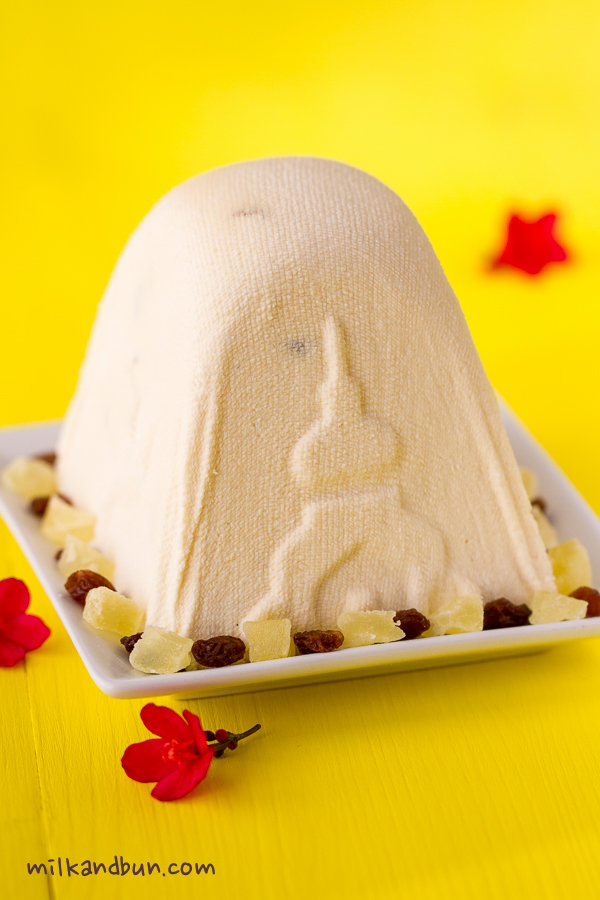
 In the previous post I’ve told you about the traditional Easter cake – kulich. But there is one more no-bake dessert for Easter, it’s called ‘paskha’, which means Easter in Russian. It’s made in a special wooden or plastic pyramid-shaped mold, which called pasochnica. Of course, it’s not easy to find such mold, but it can be easily substituted with a clean flower pot or a bowl.
There are many variations of the Paskha but of course tvorog (farmer cheese) is a main ingredient and mixed with eggs and butter. Some recipes call to mix it with raw egg yolks, another with cooked, the quantity of butter may vary as well. To flavour the tvorog mixture adding some chopped candied fruits, nuts, cocoa powder. If you love soft, creamy desserts that reminds a no-crust cheesecake you should definitely prepare it! 🙂Russian Paskha

Paskha - Russian Easter treat with tvorog

  • Servings: 2-3
  • Difficulty: moderate
  • Print
Ingredients
500g tvorog, dry preferable
60g butter, soft at room temperature (not melted)
50g chopped candied fruits like orange peel, pineapple, strawberry
50g raisins
1 large egg yolk
80-100g white sugar
1 tsp vanilla sugar
80ml cream (20-30% fat)
  1. First of all you need to beat the tvorog with an electric mixer until very smooth or push it through a sieve two times.
  2. Whisk butter for a creamy consistency. Add to tvorog along with 50g candied fruits and 50g raisins.
  3. In a small bowl whisk egg yolk with sugar and vanilla.
  4. In a small saucepan warm cream, then pour it into the egg mixture and quickly stir. Pour back into the saucepan, simmer for a 3-4 minutes, whisking continuously. Stir the mixture into tvorog.
  5. Line a paskha mold or any suitable bowl with a double layer of wet cheesecloth, pour the tvorog mixture in, fold ends of cheesecloth on the top. Arrange a weight (it can be a can or jam jar) and put in the fridge for 12 hours or up to 24 hours; allowing whey (liquid) to drain. When it’s ready to serve – unmold, remove the the cheesecloth.
  6. Decorate with candied fruits, if desired. To serve cut a slice or eat with a spoon.

Russian Easter. Kulich

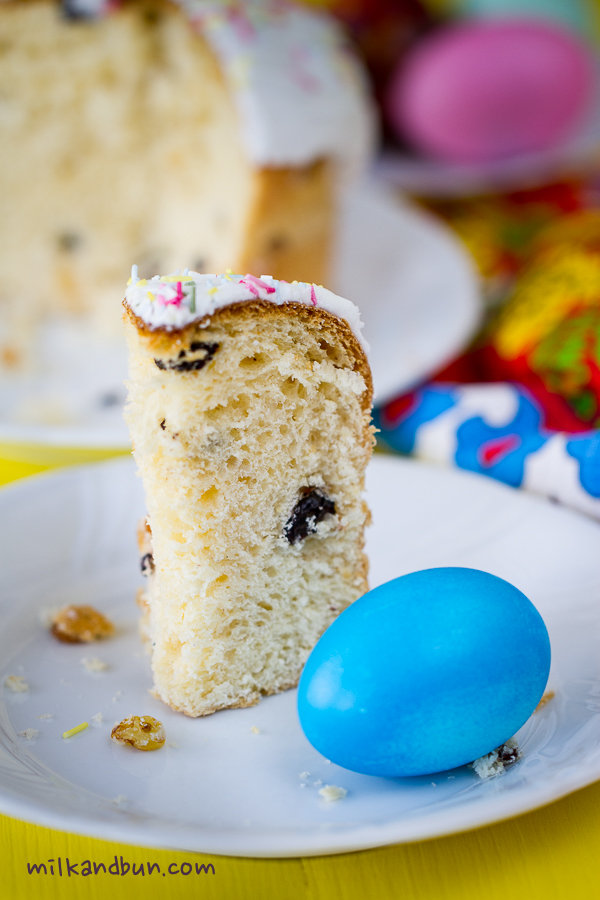
 Today is Paskha (Easter) in Russia, it’s a bright and warm festival that is celebrated among Orthodox Christians. Traditional and famous treats for this day are the colored eggs, kulichi, and paskha (in my next post). During this day we congratulate each other and say ‘Христос Воскресе’ which means Christ is risen, and the reply is ‘Воистину Воскресе’ – indeed hi is risen.Easter cake-Kulich
 Kulich is a special Easter sweet cake/bread which usually has a cylindrical shape and decorated with white icing. It’s made from rich yeast dough; raisins, currants or candied fruits can be added. Traditionally kulichi have a cylindrical shape, and some Russian housewives use empty tins from pea or beans for that purpose. After baking and cooling kulichi is glazed with white icing (egg white or water with sugar) and decorated with edible sugar beads, flowers, and thin candles. Kulichi and died eggs can be also blessed in church; a part of Easter treats usually is leaved in church for poor people.Kulich- Russian Easter cake

Kulich recipe {Russian Easter cake}

  • Servings: 2 pieces
  • Difficulty: moderate
  • Print
I used large eggs. Egg for the glazing needs to be very fresh.
The dough should be soft, but if needed add more flour.
 

Ingredients

350g plain flour

5-6g yeast
small pinch of salt
130ml milk, warm
1 egg
1 egg yolk
80g white sugar (or 90-100g to make it sweeter)
1 tsp vanilla extract or vanilla sugar
50g butter, very soft but not melted
60g raisins (golden)
60g currants (dark)
Icing
1 egg white
150-160g icing sugar
1 tsp lemon juice
Sprinkles for decorating
Preparation method
  1. In a large mixing bowl, sift 100g of flour, add salt, yeast, warm milk and stir to combine. Cover with a wet kitchen towel and let it rise for 30 minutes.
  2. Meanwhile, in a small bowl, whisk a whole egg, egg yolk, vanilla and sugar with a hand or electric mixer for 2-3 minutes until pale. Add egg mixture and butter to the dough, mix to combine. Sift the remaining flour and knead to combine. Cover again with a wet kitchen towel and let it rise for 30-40 minutes.
  3. Wash raisins and currants, blot it up with a paper towel, sprinkle with a teaspoon of flour – you need to cover all raisins with some flour, it allows them to be evenly distributed throughout the dough. Add raisins and currants to the dough, mix into the dough. Cover with a wet kitchen towel and let it rise for 60 minutes.
  4. Line baking pans with baking paper, grease with butter. Divide the dough between two baking pans, the dough should occupy 1/3-1/2 of the volume (because it will rise very high during baking) of the volume. Cover and let it rise for 20-30 minutes.
  5. Bake in preheated 100C oven for 10 minutes, then in 180C for 30 minutes or until the toothpick inserted into it gets back dry. If the top becomes too golden – cover kulichi with a piece of foil or baking pepper.
  6. Take out of the oven, let it completely cool.
  7. For the icing, whisk the egg white with few tablespoons of sugar and lemon juice until well combined. Or beat it with an electric mixer on a low speed. Gradually add more sugar and whisk again. Keep adding sugar until you get the desired consistency (not too liquid).
  8. Spread the icing on top of each kulich with a tablespoon. Add sprinkles. Let it dry.

Enjoy!

Cover kulichi in the foil and keep in the fridge for up to 3-4 days.

Russian Easter sweet cake -kulich

Pirogki with spring onions and eggs

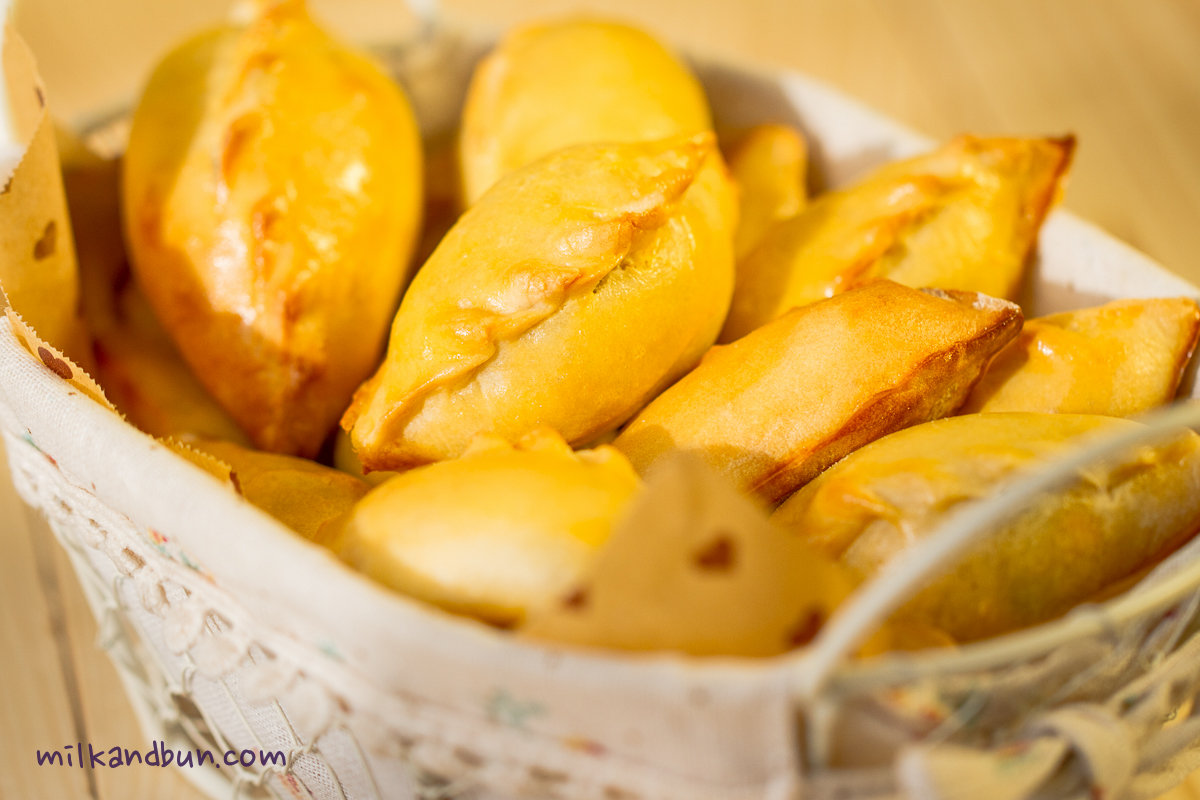
 Pirogki means small pies in Russian. Most of the time yeast dough is used for these delicious pirogki, like I made for Kulebyaka pie. But making such dough is a time-consuming, and you need to make lots of small pies or one big. I suggest you to try the dough based on kefir or any other soured milk product, it’s very quickly to prepare, and you can use both sweet and savory filling. Today I chose one of favourite filling in my family – a mixture of chopped spring onions and hard-boiled eggs. Pirogki with this filling reminds me warm days in Russia, first of the spring crops, including young and juicy spring onions from parents’ garden and amazing aroma of these pies. For my husband, it brings memories about his grandmother, the days she was cooking these pies and serving with a jug of fresh milk. 🙂Pirogki with spring onion and eggs

Pirogki with spring onions and eggs

  • Servings: 3-4
  • Difficulty: easy
  • Print
*Using sour cream is optional, you can substitute it with the same amount of kefir or creme fresh. 
These pirogki is also good with a soup instead of bread.
Ingredients
220-250ml full fat kefir (buttermilk or laban)
1/2 tsp baking soda
1/2 tsp salt
1 tsp white sugar
2 tbsp sour cream*, optional
1 large egg
2 tbsp sunflower oil
400-450g plain flour
Filling
150g spring onions, chopped
1 tbsp butter
4 large eggs, hard-boiled, chopped
S&P to taste
Egg wash
1 large egg yolk
1 tbsp milk
Preparation method
  1. In a large mixing bowl, add kefir, soda, salt, sugar and mix. Leave for 4-5 minutes. Add sour cream (if using), egg, sunflower oil and mix well. Sift the flour into mixture, stir to combine. Cover with plastic wrap or kitchen towel and leave to rest for 20-30 minutes. If you don’t have time – rest it for 10 minutes or for a time while you’re preparing the filling.
  2. For the filling, in a small frying pan melt the butter, add chopped onions and saute on a medium heat for 5-7 minutes until soft. Don’t let it burn. In a bowl combine soft spring onions with eggs, season to taste.
  3. Roll the dough into 10-12cm circles, add 2-3 tsp of the filling into each circle, seal the edges.
  4. Arrange pirogki on a lined baking tray. Brush each pie with egg wash {for egg wash whisk ingredients together}. Bake in preheated 180C oven for 20-22 minutes or until golden.
  5. Serve warm with a glass of milk.
Enjoy! ❤
PiesEggsOnion
Russian pirogki - small pies
Sharing at Fiesta Friday party, wonderful party where Angie is a lovely hostess, and Margy and Selma are co-hosts this time.
1 4 5 6 17